Wednesday, April 15, 2009

Country Mouse in Mozambique


As I said, here is a little more about rural Africa, where 70% of people live.

In rural Africa, most people are farmers. They live in small mud houses and may have very few possessions. The most prized possessions of a family are usually their home, the clothing they wear, and a radio or bicycle.

Today, more and more families are obtaining cell phones, which help them to connect with the outside world. Two major cell phone companies advertise everywhere in Mozambique, and it is very “cool” for kids and adults to wear tee-shirts advertising their cell phone company, which may be vodocom and mcel. Most rural areas do not have electricity though, so televisions, refrigerators, and even lights are impossible.

When people think of rural Africa, they think of tribes. Tribes, also known as ethnic groups, actually exist in both rural and city areas. Across Africa, there are very different types of tribes. Some tribes are just like modern day families – extended groups of people who are related and watch out for each other. Men in a tribe, who may even wear a suit and work in cities just like your own parents, might only relate to their tribe in the sense that they try to give jobs to other tribal members, vote for other members, or support them in other ways. Your tribe may also serve as a political party.

The tribal systems that I know the most about are those in Mozambique. Here, most can identify with a tribe the same way we can each identify with a race or historical background. For example, I identify myself as Irish, Scottish, and English. Here in Mozambique, someone may identify himself as Macua, Maconde, or Shangani. But, it does not change the way they dress or act.

In other countries, like Kenya and Tanzania, there are still famous rural tribes like the Maasii people who wear distinctive clothes. They wear very different clothes and do not participate in modern day society. Although today most do not participate in schools or work with other non-Maasii, the government is pushing them to become more a part of modern society. This is because many of the former rural tribes did not treat women very well, and did not allow girls to go to school. They tend to be are very poor and uneducated. They do not use electricity, and die very young because they have no healthcare. By bringing these tribes into the modern world, countries are helping them to build houses with electricity, enter schools, use doctors, and work with the rest of the country.

Note: It is illegal to take pictures of Maasii people, so I got these photos from the internet. Some photos of them are taken, but one must usually pay the communities money for the photos.

Pictures:
1 & 2 rural homes
3 An unfinished rural home
4 & 5: Maassi tribe members

Thursday, April 9, 2009

Mozambique: My Work in the Country

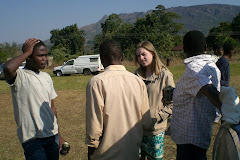
My job: A road trip adventure through Nampula, Niassa, and Zambezia


My Job: Adventures with coconut farmers in Zambezia


Here are some pictures from my work in rural Africa. I will write more about life in rural Africa over the weekend, but figured once you see some pictures you can start to ask some questions.

Cheers,
Liz

Sunday, April 5, 2009

How Big Is Africa?


This is my favorite picture to share with friends, who don't realize that "Africa" is actually an entire continent with around 50 countries and approximately 2,000 different languages spoken. It is extremely diverse, just like New England's culture differs from that of Eskimos and Mexicans!

Maputo: Life as a City Mouse

Just for Kids: Pictures of the City Life


My first big surprise about Africa was that it had cities, too.

In fact, I've spent most of my time here living one: the capital city of Maputo.

Now, if your vision of Africa was "The Lion King" and "Madagascar", don't be embarrassed. Africa does have huge rural areas, and more diverse wildlife than anywhere in the world. In addition, most people in Africa live in rural areas. In Mozambique, this is over 70% of the people (in Africa as a whole, 60% in rural areas).

Yet cities are a major part of African countries like Mozambique and inhabited by millions. In Maputo, there are at least 1.2 million people - twice the size of Boston and ten times as big as Hartford - living here. And many of them find it very silly when we imagine their lives surrounded by lions or zebra: they are surrounded by buildings and cars!

Unlike the country, the city has many of the luxuries we have in America. There are streets, cars, and taxis; schools and office buildings; food markets and running water. Of course, you will see that many of the buildings are very old, and many of the streets have huge pot holes. But they still exist.

The city is a lively and fun place to live. There are always many people in the streets, selling arts and crafts and fruit and nuts(and battery chargers, pirated DVDs, and cell phones). One of my first surprises living here was just how beautiful the streets look when the men lay out rows of paintings and decorated clothes (batiks). I wish our streets had more color!

Mozambicans are also a very friendly culture, and walking down the street, everyone says hello! It was quite a surprise to me when people I didn't know started talking to me as if we were old friends. In some cases, I have become friends with people on the streets. In other cases, I have to ignore them and walk away so that they don't think I want to marry them!

I also learned that even in the city, there are still many, many poor people. On my street and in my neighborhood, there are very many young boys and men who live right on the street - looking for food in dumpsters and spending the day just visiting with each other and trying to stay alive. I have learned that in Maputo, young girls are actually more valuable to a family than young boys, because the girls will do cooking and cleaning and fetching water, so the boys can be kicked off when they are as young as 6 or 7 years old. At that point, there is usually no hope they will go to school, and instead they join the boys on the street. In good cases, they can get a job selling peanuts, but otherwise they may be forced to beg for every meal. There are several young boys like this on my street. Can you imagine if a good day was one in which someone gave you their leftovers from a restaurant? That is the reality here for many of the poor people in Maputo.

I hope this shares a little with you about my city. I am learning so much living here and look forward to sharing more.

Please send me any questions you may have.

Keep up the good work in school, everyone!

Liz

Welcome to my blog!

This is a blog to share with you a little about my life in Africa.

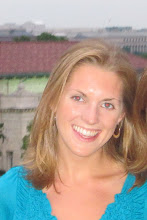
To first share with you a little about me, I grew up in Ellington, half a world away from Mozambique where I am living right now.

Ever since I was 7 years old, watching a slide show of my Aunt's trip to Africa, I thought it might be a very cool place to go someday. I love the outdoors, and around here there is plenty of that! However, I never knew I'd make it here, to a country whose name I had never even heard of.

But, there is lots of work for interested young people here, and I made my way to Mozambique by joining an organization called TechnoServe as a volunteer. We work to help Mozambicans start and grow businesses.

I am also passionate about the environment, so I've incorporated that into my work - helping my co-workers and our partners encourage "green" sustainable agriculture practices. I have worked on projects that will help small farmers plant coconut trees, and another project which will help women to start maize mills in communities.

For all that is different here in Mozambique, I've been surprised how much is the same. We even have the internet! But I'll save that for another post..